
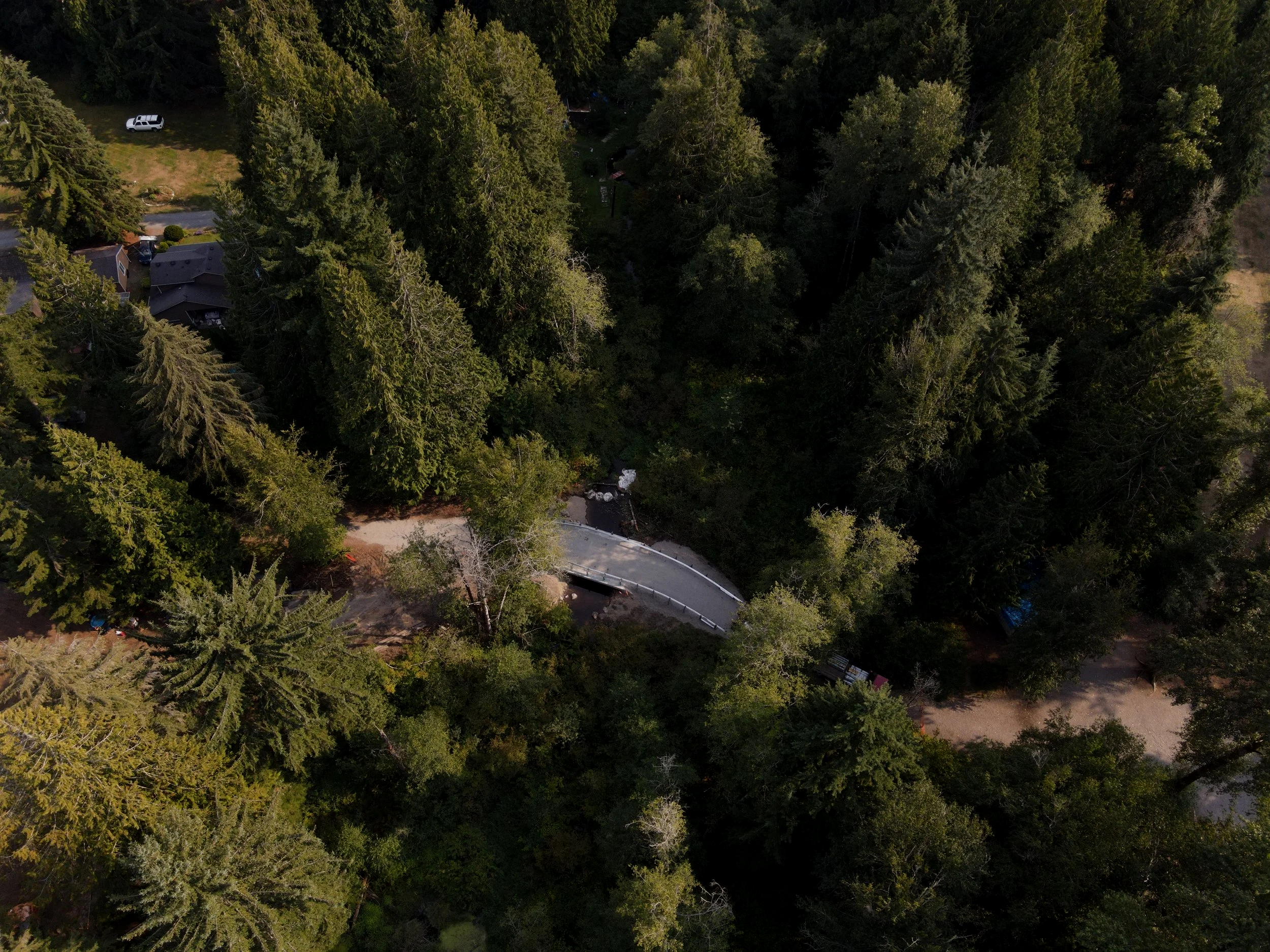
An aerial of Cedar Springs Camp after the construction of a new culvert that allows fish to safely pass under a road.
Opening the Way: Restoring Our Watersheds
In 2025, Snohomish Conservation District helped reopen critical pathways for salmon by advancing fish passage projects that remove barriers like undersized culverts and failing stream crossings. Each replacement may look like a single construction project—but for salmon, it opens miles of newly accessible habitat.
In priority watersheds like Woods Creek and the Pilchuck River, this work is part of a long-term, coordinated strategy with partners including Tulalip Tribes, Snohomish County, and regional restoration organizations. Together, these efforts are reconnecting fragmented waterways and prioritizing the highest-impact barriers. Many of these projects are made possible through years of relationship-building with landowners who choose to partner in restoring habitat on their property.
Site investigation for the Cedar Springs Camp culvert included drilling deep into the ground to map out the soil layers and ensure a stable build.
A timelapse of the Cedar Springs Camp Culvert walls being installed by crane.
Habitat Restoration Project Manager Christine Stephens (left) surveys the creek from atop the newly-constructed culvert.
Salmon were observed swimming in the opened channel shortly after construction.
But opening habitat is only one piece of the puzzle—and that’s where the rest of our work comes in.
In 2025 we continued to advance restoration at every scale. Our staff and crews planted 36 acres of native plants along waterways and in upland areas across the District. At our Orca Recovery Day event in Stanwood, volunteers planted 200 native plants and removed blackberries along the Stillaguamish River, working to restore habitat while learning about the role these landscapes play in supporting salmon. On winter weekends along the Skykomish River where participants camped out to remove invasive species, plant native vegetation, and deepen cultural connection to the land.
Healthy forests play an equally important role in supporting salmon habitat. When trees are overcrowded, intense competition for light and water can stunt growth, limiting the forest's capacity to store moisture and maintain a healthy canopy over nearby waterways. In 2025, the District trained staff and partners in pre-commercial thinning—building hands-on expertise that will benefit both landowners and downstream ecosystems.
Working with partners like Tulalip Tribes and the Washington Conservation Corps, crews completed thinning projects on local properties to reduce overcrowding and give remaining trees space to grow larger and develop stronger root systems. These healthier forests are better able to retain water, reduce erosion, and moderate stream temperatures—benefits that extend to the salmon that depend on cold, clean water.
In partnership with the City of Everett, the District piloted a new approach to engage streamside landowners along North and Swamp Creeks. Instead of large construction projects, this effort focused on small targeted plantings paired with outreach designed to understand what motivates people to take action on their own property and to give residents the tools and confidence to steward the land around them. A few hundred square feet of native plants here, a small buffer there—each one adding up to reduce runoff, increase shade and improve habitat where traditional restoration funding rarely reaches.
Over 50 volunteers joined us for the 8th Annual Orca Recovery Day with Puget Sound Public Farms in Stanwood.
Some attendees have made it an annual tradition to attend Orca Recovery Day with their family.
Our partnership with the City of Everett opened up a unique funding pathway for smaller backyard planting projects along streams.
We planted 5 streamside planting projects along North and Swamp Creek within Everett. Each project was highly visible by neighbors and acted as a launch point for neighborhood inspiration.
Natural systems now help manage stormwater across urban areas in the District. In Edmonds, we constructed a 357-foot bioswale planted with nearly 400 native plants, and in Lynnwood, we installed four new rain gardens on private properties. These “green stormwater infrastructure” projects enhance both the beauty and function of the landscape, capturing and filtering pollutants like oil, fertilizers, and sediment from runoff before they reach local waterways.
Our 40th Annual Plant Sale resulted in the sale of more than 40,000 plants to over 1,200 people, each taking home plants that contribute to healthier landscapes across the region. As these plants take root in backyards, farmland, and community spaces, they help stabilize soil, filter runoff, and—when planted along waterways—provide shade, food, and habitat that support salmon.
All of these efforts tell a larger story. Salmon recovery doesn’t happen in one place, it happens everywhere. From replacing a culvert miles upstream to planting trees along a creek, installing a rain garden in a backyard to building resilient forests, each action contributes to cleaner water and improved habitat, made possible by landowners, volunteers, and partners working together across the District. In 2025, we didn’t just open the way for salmon—we helped ensure there is a healthy place for them to return to.
In 2025, our field crew Installed 4 rain gardens in Lynnwood to absorb rain, prevent flooding, and filter out pollutants.
The Edmonds bioswale is nearly the length of a football field and required an excavator to dig.
Combined, the Lynnwood projects will absorb nearly 60,000 gallons of stormwater per year. That’s more than the City of Marysville’s historic water tower!
This project is supported with funding from Washington’s Climate Commitment Act. The CCA puts cap-and-invest dollars to work reducing climate pollution, creating jobs, and improving public health. Information about the CCA is available at www.climate.wa.gov.